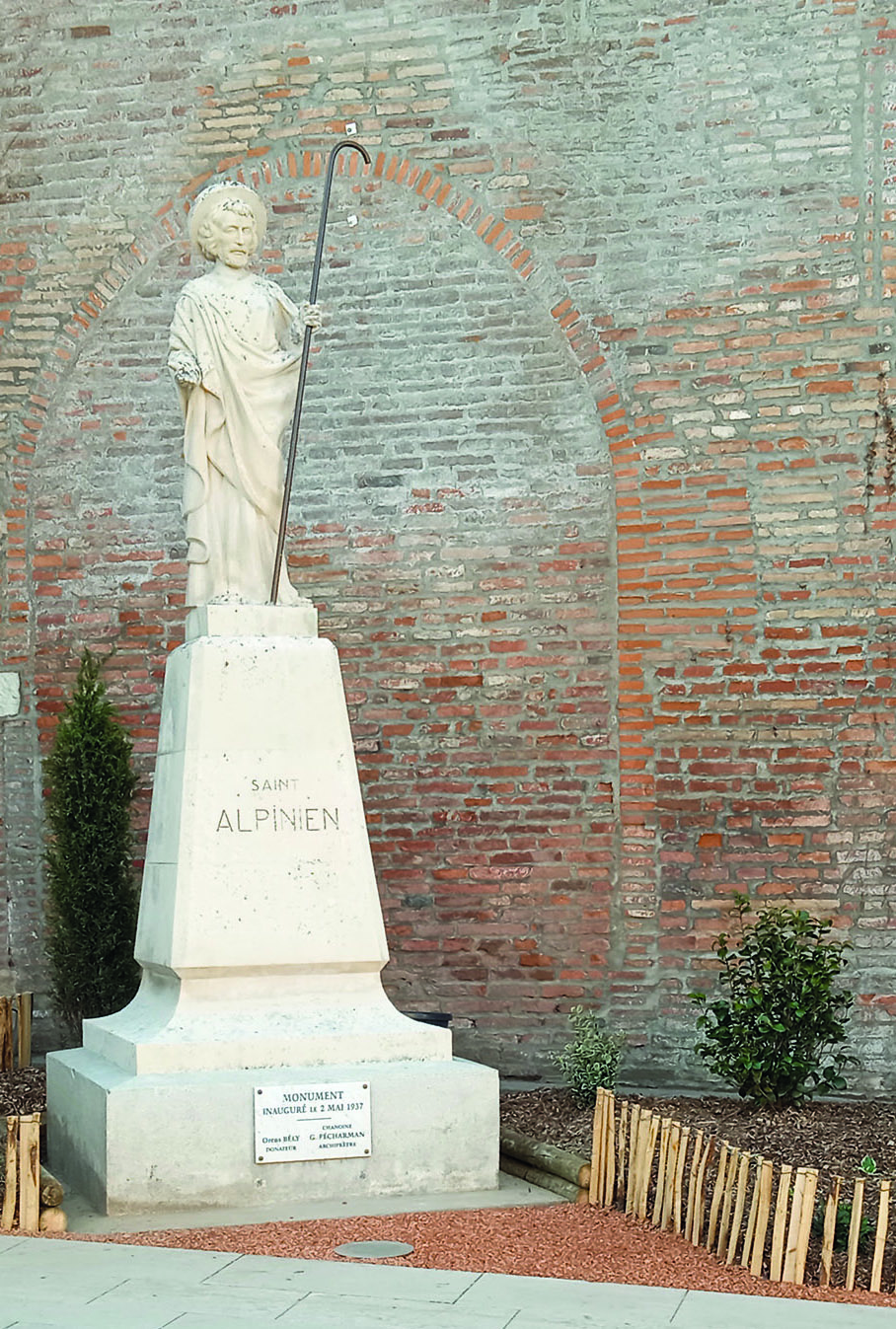
Alpinien: that’s a very strange first name, one that has long since disappeared from the calendar of saints. Yet, since the Middle Ages, this name has been given to hundreds of newborns in Castelsarrasin.
The Tarn-et-Garonne Genealogical Assistance Association has investigated this mysterious phenomenon and will present the results of(…)
Alpinien: that’s a very strange first name, one that has long since disappeared from the calendar of saints. Yet, since the Middle Ages, this name has been given to hundreds of newborns in Castelsarrasin.
The Tarn-et-Garonne Genealogical Assistance Association has investigated this mysterious phenomenon and will present the results of its research during this guided tour.
Since April 6, 1279—the date Alpinien’s relics arrived in Castelsarrasin—his cult has continued to grow, attracting thousands of pilgrims every April 26, the date of his death according to tradition.
The Association for the Preservation of Castelsarrasin’s Heritage will present an exceptional artifact reflecting this devotion: the woodcut plate used to print posters for the Saint Alpinien pilgrimage. Dating from the 18th century, this wooden object—much like a “relic”—is now protected as a historic monument.
ABOUT THE SITE
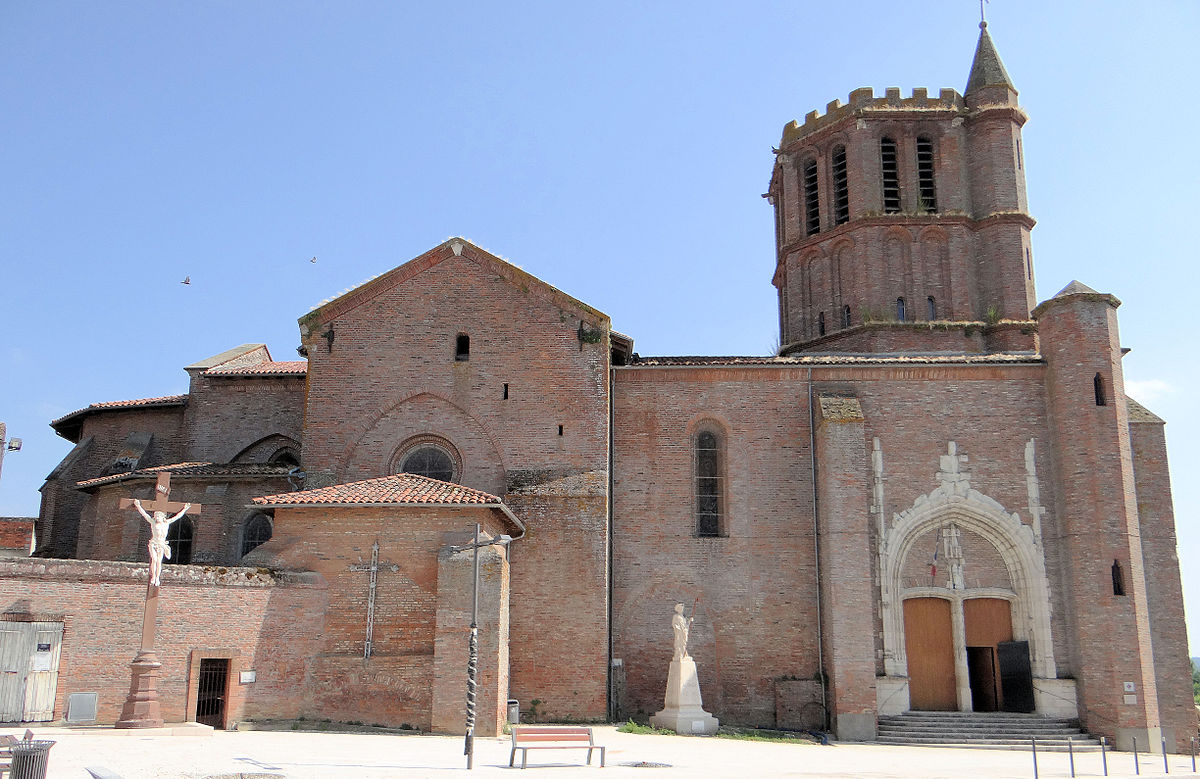
Saint-Sauveur Church – Place de la Raison in Castelsarrasin
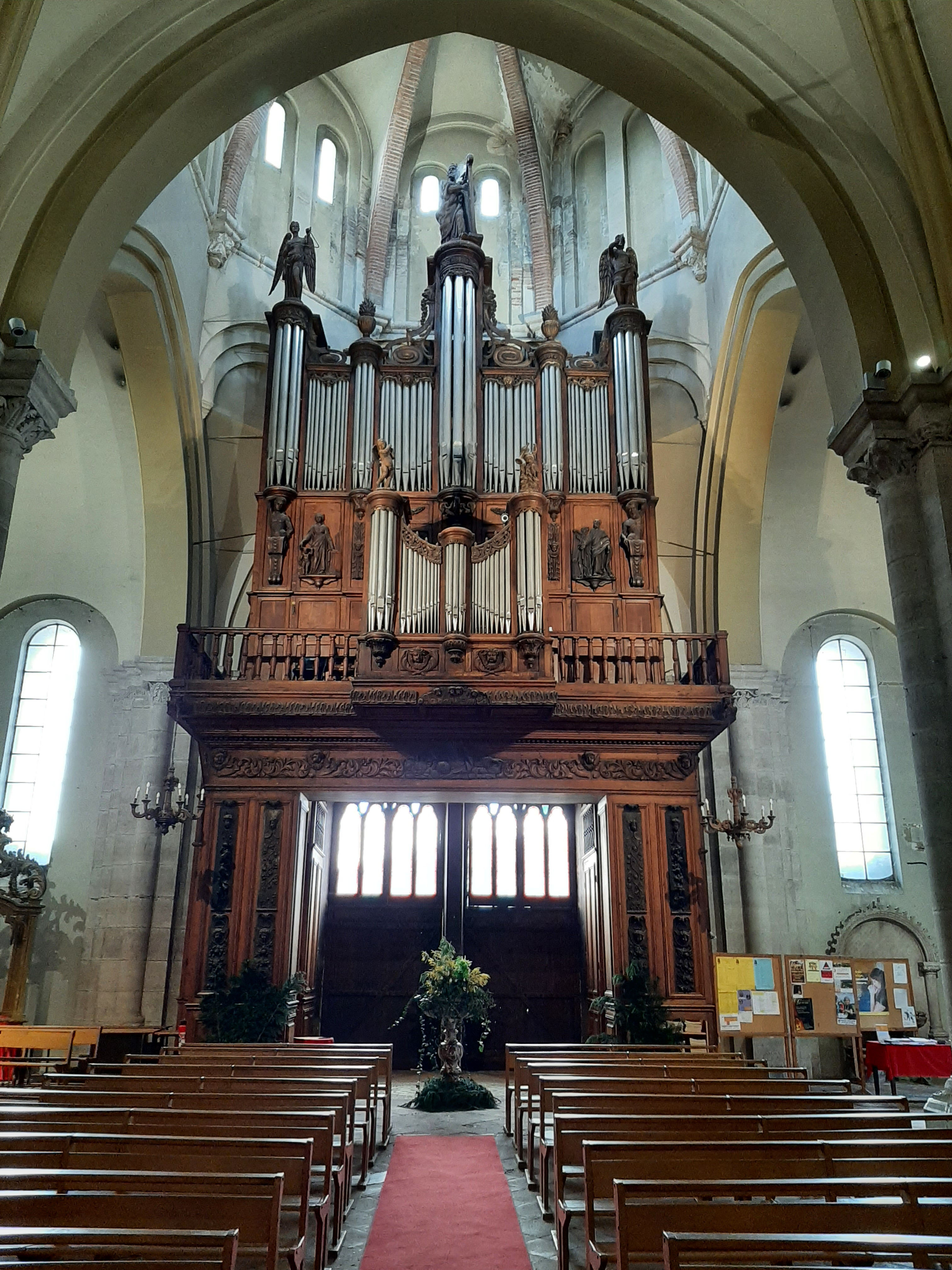
Part of the Moissac domain, Saint-Sauveur was a flourishing priory whose church, rebuilt between 1254 and 1271, stands as one of the landmarks of early Gothic architecture in Languedoc. A transitional structure with three naves, a slightly projecting transept, and a flat apse, it features ribbed vaults and transverse barrel vaults. To the south of the church, the priory was built around a cloister and the prior’s house. Around 1500, the choir was extended with a cut-off apse, chapels were added, and the north façade was pierced by a Flamboyant-style portal. The priory ceased to exist at the end of the 18th century. Used to house the Temple of Reason between 1793 and 1795, the church was subsequently returned to religious use. Numerous alterations took place during the 19th century: the installation of floor tiles in 1814; replacement of the stained-glass windows; the creation by Loubens of a baldachin for the high altar; and work on the chapels of the Virgin Mary and Saint Alpinian…

 Updated on 27 July 2026